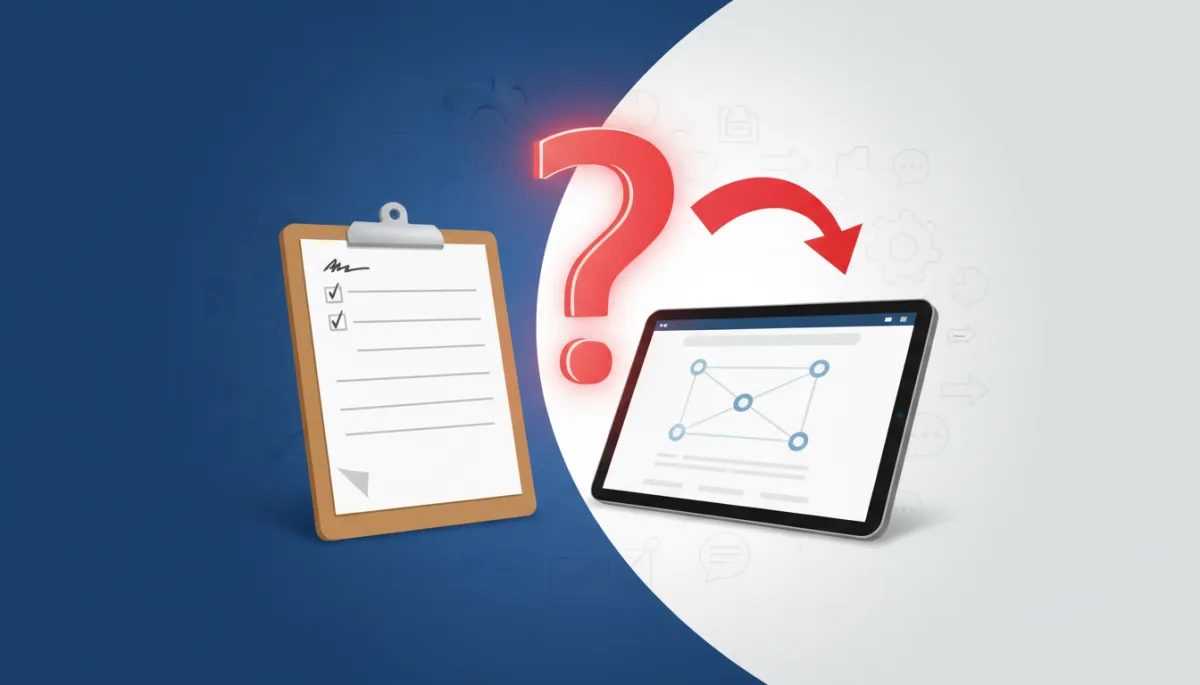
CRM vs. Clipboard: New Agents' Common Mistake
Real Estate, Productivity, Technology
CRM vs. Clipboard: The Technology Question Every New Agent Gets Completely Wrong
New agents obsess over picking the perfect CRM, app, or platform. But the real difference between agents who thrive and those who burn out has almost nothing to do with software—and everything to do with fundamentals they haven’t mastered yet.
Why New Agents Start With the Wrong Question
Ask any group of new agents what they’re working on, and you’ll hear the same thing on repeat: “I’m trying to pick a CRM.” It feels productive. It feels professional. It feels like the kind of decision serious agents make. Yet for most beginners, it is the least important decision on the table.
Here’s the uncomfortable truth: if you don’t already have people to talk to, a follow-up plan, and the discipline to execute daily, the world’s best CRM won’t save you. It will simply organize your lack of activity with impressive efficiency. The technology conversation is the wrong place to start because it assumes you already have something worth systematizing.
Fundamentals First: What Actually Moves the Needle
Before you worry about whether you should use a clipboard, spreadsheet, or CRM, you need clarity on the basics of your business. These fundamentals are boring on the surface, but they are exactly what top producers revisit year after year:
Who are you serving? First-time buyers, downsizers, investors, a specific neighborhood? Vague audiences lead to vague conversations and vague results.
How will you find them? Open houses, online leads, referrals, door knocking, social media, or community events—pick a few and commit.
What is your follow-up promise? How quickly do you respond? How often do you check in? What value do you bring each time you reach out?
What does a winning day look like? How many conversations, handwritten notes, or appointments set? Without these numbers, no tool can keep you on track.
Once these pieces are clear, even a plain clipboard or legal pad becomes powerful. You know exactly what to write down, who to call, and what to do next. The tool stops being the star of the show and becomes what it should have been all along: a simple support act.
Clipboard vs. CRM: What Really Matters in the Early Days
A clipboard has serious advantages for a brand-new agent. It’s visible, tangible, and impossible to minimize into a browser tab. You can carry it into open houses, prospecting sessions, and listing appointments. You can flip through yesterday’s notes and instantly see who you still need to call. There is no login, no learning curve, and no excuses.
A CRM, on the other hand, shines once you already have a steady stream of contacts and a repeatable process. It helps you automate reminders, send campaigns, and scale what’s already working. But if your pipeline is empty, a CRM becomes a sophisticated reminder that you don’t have enough people to follow up with yet.

The best tool is the one you will use consistently to track real conversations.
Start With Activity, Then Layer on Technology
The most effective way to approach technology is to flip the usual order. Instead of asking, “Which CRM should I use?” start by asking, “What are the core activities I need to do every single day to build my business?” Then:
Define your daily non-negotiables. For example: 15 conversations, 5 follow-up texts, 3 handwritten notes, 1 appointment set attempt.
Track them in the simplest way possible. A clipboard, notebook, or basic spreadsheet is enough to prove you can execute consistently for 60–90 days.
Notice where you feel friction. Are you losing track of follow-ups? Forgetting birthdays? Struggling to see your pipeline at a glance? Those pain points tell you what kind of tech you actually need.
Choose tools to solve specific problems. Now the CRM decision is grounded in real experience, not fear of missing out on the “perfect” platform.
The Question Successful Agents Ask Instead
New agents obsess over, “What’s the best CRM?” Successful agents ask a different question: “How can I have more meaningful conversations with the right people, more often?” Technology becomes useful only after that question is answered and acted on. Until then, a clipboard, a pen, and a clear plan will take you further than any feature-packed platform.
When you focus on fundamentals—who you serve, how you find them, how you follow up, and what you do every day—you build a business that works with or without fancy software. And once you have that foundation in place, choosing a CRM stops being a stressful gamble and becomes what it should have been from the start: a simple, strategic upgrade to a system that already works.
